Mahjong Soul is the default choice for English-speaking riichi players — free to play, always has a table open, and available on browser, iOS, Android, Steam, and a dedicated Windows client. That accessibility is also the catch: the built-in tutorial covers interface basics well but skips two rules that will trip up your first real hand, and the mode menu offers more choices than a total beginner needs on day one. This guide closes the gap between “installed” and “playing a real ranked hand with some confidence.”
I actually play on Mahjong Soul, so every screen, menu, and rank room named below is one I’ve clicked through myself, not something pieced together from a store listing.
This isn’t a rules explainer. If you don’t yet know what tenpai is, what a yaku is, or why the win button sometimes refuses to appear, stop here and read how to play riichi mahjong first — ten minutes there will save you a confused first session. This guide assumes you know the rules and just need to know what to click, in what order, and what to safely ignore along the way.
Step 1: Create your account and get through the tutorial
One account carries you across every platform Mahjong Soul supports — browser, iOS, Android, Steam, and the standalone Windows client — so pick whichever you’ll actually stick with and sign up there; your progress follows you if you switch later.
The built-in tutorial walks a first-timer through tile identification, how calling works, and one ranked match, and it does that competently enough that you won’t feel lost. That’s genuinely useful for building interface muscle memory — where your hand sits, how discards line up, what the call buttons do — before you need any of it under pressure. Go through it.
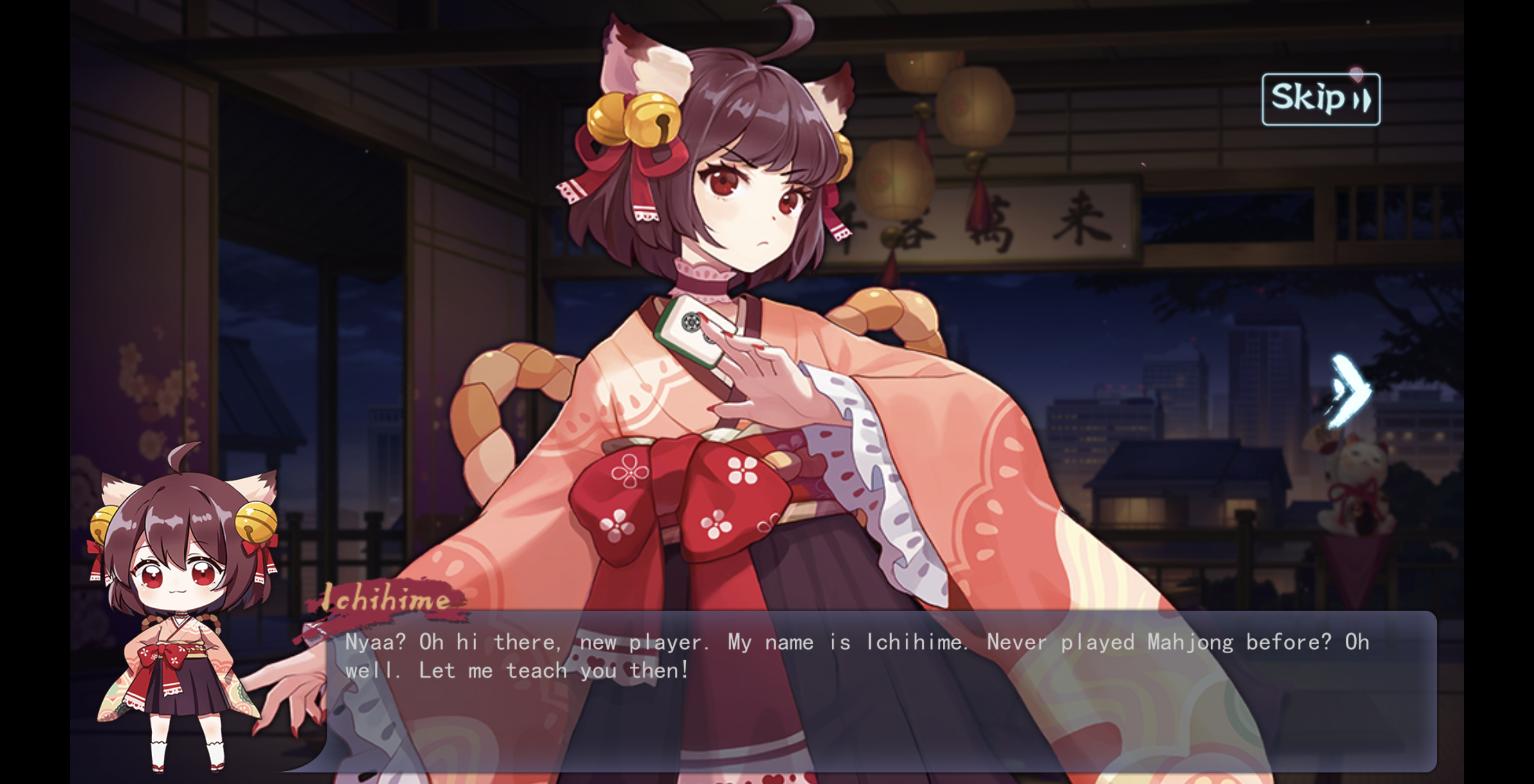 Screenshot from the English browser client.
What it won’t do is explain furiten or the yaku requirement properly — both stay underexplained, and both are common enough causes of a baffled first loss that skipping them isn’t a small gap. If you’ve already read the beginner’s guide, you’re covered. If you haven’t, this is the second reminder to go do that before you rely on your first few real hands to teach you.
Step 2: Pick your first mode
Once the tutorial ends, you’ll be looking at a menu with more options than you need on day one. Mahjong Soul splits its games into three modes, and the difference matters more than the labels suggest.
Ranked is the mode that moves you up or down the rank ladder, and it seats you in rooms by rank tier — Bronze Room for Novice, Silver Room once you reach Adept, Gold Room as you close in on Expert. Casual Match runs the same rules, no rank at stake — it’s the low-stakes version of the real game, not a watered-down one. Friendly Match is a private room you set up yourself, and it’s the only mode that lets you play against AI instead of other people.
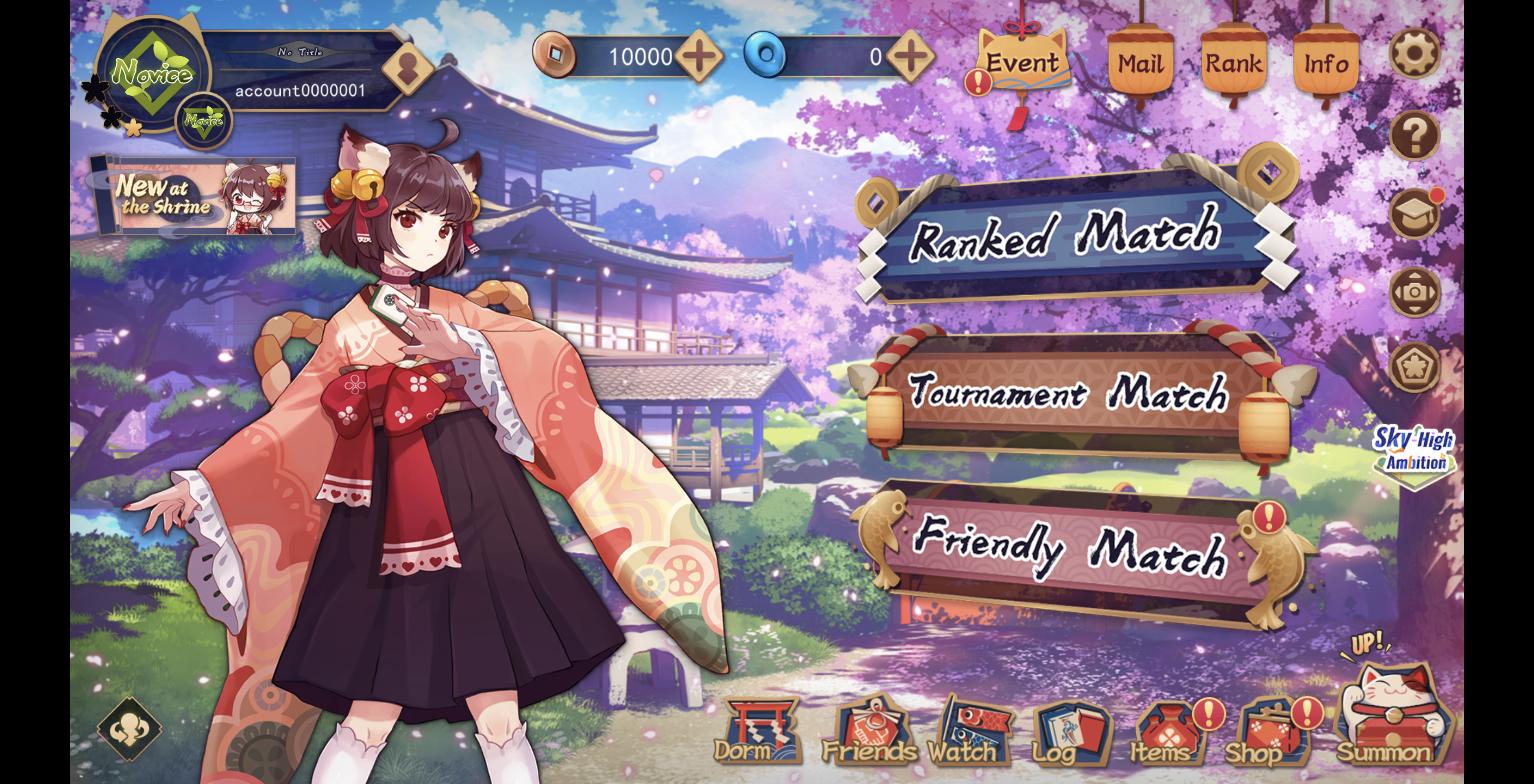
For your actual first game, open a Friendly Match against AI, or queue Casual Match if you’d rather play real opponents without anything riding on the result. Either way you get through a full hand without it following you anywhere. Once a game or two stops feeling foreign, move to Ranked — you’ll land in the Bronze Room automatically, so there’s no on-ramp you’re skipping by going there directly.
Four-player or three-player (sanma). Learn four-player first. It’s the standard game, it’s what the beginner’s guide describes, and three-player riichi runs modified rules that will only confuse you before the base game is automatic. Sanma is worth exploring later, once four-player stops requiring conscious thought.
Step 3: Play with the rules, not around them
This is less a Mahjong Soul-specific step and more the actual point of everything before it: spend your first several real games putting the three rules of thumb from the beginner’s guide into practice.
- Don’t call. Skip chii, pon, and kan for now. Calling opens your hand, and an open hand disqualifies you from riichi and kills several of the easiest ways to make a hand legal.
- If you reach tenpai with a closed hand, declare riichi. Don’t overthink it — riichi is itself a yaku, so it’s the most reliable path to a legal win in the entire game.
- Take cheap wins. Finishing a hand, any hand, is the skill you’re training. A tiny riichi-only win teaches you more right now than chasing a big hand you never complete.
The client enforces every rule for you — it won’t let you claim an illegal win, and it flags furiten automatically — so the actual risk in these early games isn’t breaking a rule, it’s overthinking a decision the game will catch for you anyway. Play fast, play simple, and let a few badly played hands teach you what reading about them can’t.
Step 4: Understand how the rank ladder works
Ranked play is the default mode, and it’s where you’ll spend most of your time once Casual Match and Friendly Match stop being necessary. The ladder has six tiers total, starting at Novice and topping out at Celestial, with four-player and three-player tracked on separate ladders — and each tier band maps to a room. The Bronze Room seats Novice and Adept, the Silver Room seats Adept and Expert, and the Gold Room seats Expert and Master; Jade Room and Throne Room wait well past beginner territory.
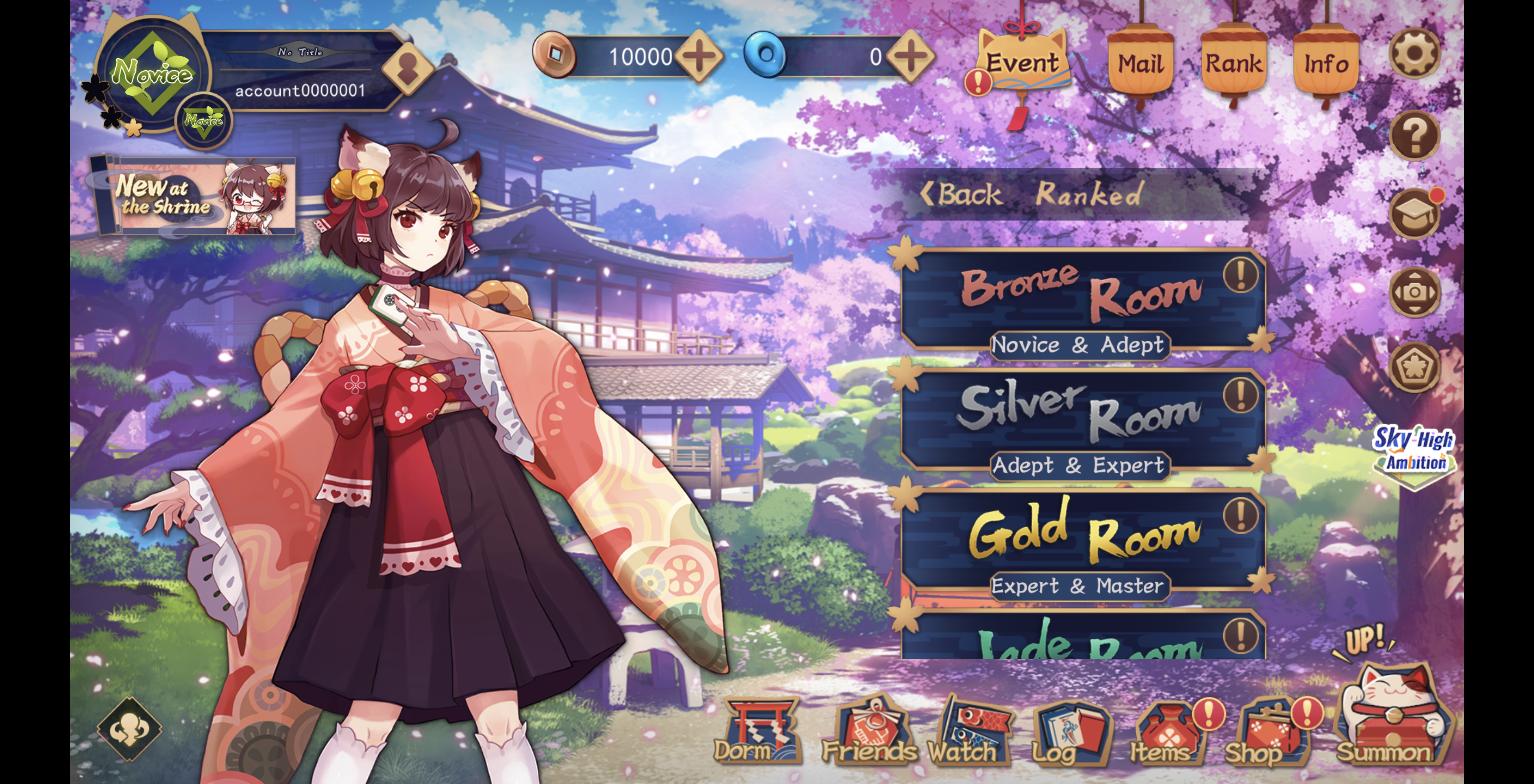
The important thing for a beginner to know going in: climbing is a matter of accumulated results across many games, not a single high-stakes gauntlet, and the ladder cares almost as much about how many games you log as how well you play them. That means you can have a genuinely rough stretch of games while you’re learning and still see steady upward movement as long as you keep playing. Don’t read a bad session as a signal to stop — the design of the ladder assumes you’ll lose a lot early and climbs you anyway.
What to ignore: the gacha, the characters, the skins
Mahjong Soul’s presentation is built around anime character portraits, voice lines, and a cosmetic gacha system, and it’s easy to feel like you’re missing part of the game if you’re not engaging with any of it. You’re not.
The monetization is cosmetic-only — money buys characters and outfits, not an edge at the table. There’s no card, item, or upgrade in the gacha that makes your hands stronger or your opponents weaker. The free currency for pulling characters drips out slowly, and if you care about collecting a favorite character’s full wardrobe without paying, that’s a real patience investment — but it’s a side hobby bolted onto a free competitive game, and you can skip it entirely and still play every mode seriously.
As a total beginner, the correct amount of attention to give the gacha is zero. Close the pull screen if it pops up, ignore the currency counter, and spend your first weeks entirely on the mahjong itself. If the collecting loop turns out to genuinely interest you later, it’ll still be there — nothing about ignoring it now costs you anything competitively.
Common beginner mistakes to avoid
A few patterns show up constantly in new players’ first sessions, and knowing them in advance is cheaper than learning them the hard way.
Calling on instinct. The call buttons (chii, pon, kan) are right there on screen, and it’s tempting to use them the moment they light up. Every call opens your hand and moves you further from riichi. Skip them entirely until the yaku rule feels automatic.
Chasing a big hand instead of taking tenpai. New players often keep reshaping a hand hoping for something impressive instead of locking in riichi the moment they reach tenpai. Take the win. You can chase bigger hands once finishing hands at all stops being the hard part.
Not knowing why a hand isn’t legal. If you complete four sets and a pair and the win button still isn’t there, that’s the yaku requirement doing exactly what it’s designed to do — your hand is complete in shape but has no qualifying scoring pattern. This is the single most common source of beginner confusion on Mahjong Soul specifically, because the tutorial underexplains it. Riichi, all simples, and value tiles (a triplet of dragons or your seat/round wind) cover the overwhelming majority of early wins; if your hand has none of those, it isn’t winnable yet no matter how complete it looks.
Treating a rough session as a signal something’s wrong. The rank ladder is forgiving by design and rewards volume. A bad night of games is normal, not a sign you’re doing something wrong.
Getting pulled into the gacha early. Covered above, but worth repeating as a mistake specifically: spending your first weeks’ attention or currency on characters instead of the mahjong itself slows down the part of the game that actually determines whether you enjoy it long-term.
Where to go from here
Once a few sessions have gone by and the basic loop — draw, discard, don’t call, riichi at tenpai — stops requiring conscious effort, the next useful step is widening what counts as a legal win. The complete riichi yaku list is worth keeping open in a second tab as a running reference; look up each new yaku the first time the game names it in one of your hands.
If you’re still deciding whether Mahjong Soul is the platform you want to keep playing on long-term, or you’re curious what you’d be trading away by switching to something with a more exacting rank ladder or a cleaner monetization model, Mahjong Soul vs Tenhou vs Riichi City lays out the real differences.
FAQ
Do I need to spend money on Mahjong Soul to start? No. Every ranked table and rank tier is free, and spending only affects cosmetics like character skins and outfits. You can play your first game and every game after it without opening your payment method.
What mode should a beginner queue for first? Open a Friendly Match against AI, or queue Casual Match if you’d rather face real opponents without rank consequences, and stick to four-player over three-player until the rules feel automatic. When you move to Ranked you’ll start in the Bronze Room automatically, so there’s nothing to unlock first.
Do I need to understand the rules before installing Mahjong Soul? You need the basics — the winning shape, how a turn works, and the yaku requirement — before your first hand will make sense. Our guide to riichi mahjong basics walks through those in the right order, and it only takes ten minutes before you open the app.